


Advertising funds the modern internet — but the economics are skewed, the models are misaligned, and effectiveness is sliding. Omar Oakes and Nick Manning unpack the Advertising Who Cares event: how platform consolidation reshaped incentives, why agency service models are cracking under AI, what “quality media” should mean in 2025, and the practical steps marketers and agencies can take to rebuild value.
This is a special one-off conversation. If you like it and want to hear more, send a quick note to omar@oomphoomph.com!
Find out more at advertisingwhocares.org
Key takeaways
Power has shifted upstream. A handful of platforms capture a disproportionate share of ad revenue and growth; their incentives now shape what “advertising” looks like for most people.
Effectiveness is a business problem, not a vibes problem. Over-automation + cheap inventory + weak environments = declining impact and weaker funding for quality media.
Client models are the choke point. Fragmented orgs, siloed KPIs, and short-term targets prevent marketing from proving enterprise value.
Agency models must change. Move beyond time-based billing and opaque extraction toward productised expertise, outcome alignment, and legitimate value capture.
Quality media matters. Plan for engaged environments that build memory and attention — not just cheap reach via one-to-one interruption at scale.
Act your way out. Test–learn with real holdouts, rebalance collective vs. one-to-one, fix measurement around business results (not clicks), and give agencies skin in the game.
For Marketers (Do This Next)
Un-silo the 7Ps. One team, one data spine, one objective: long-term value growth.
Rebase measurement. Judge your mix on profit/enterprise outcomes, not proxy “outcomes”.
Run controlled “turn-down” tests. Prove what social/search/programmatic actually contribute.
Rebalance the mix. Use collective, high-attention environments alongside precise activation.
For Agencies (Do This Next)
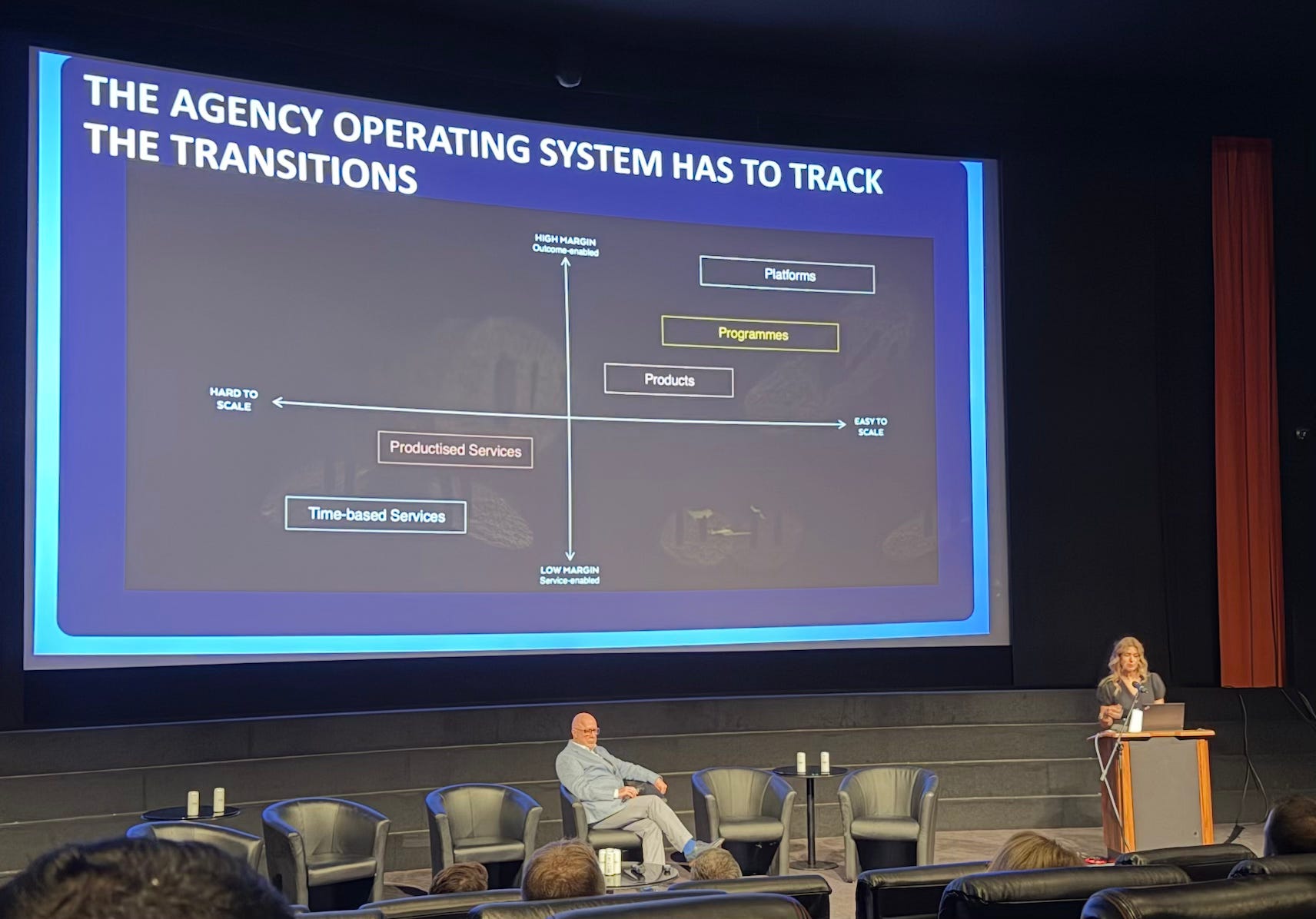
Change the front door. Package offers by client problem (programme/products/platforms), not effort.
Price the value, not the hours. Pilot hybrid or at-risk models where you can prove uplift.
Be the comms adults. Set the balance between memory-building media and performance activation; stop chasing short-term metrics that degrade the brand.
Clean supply. Proactively cut waste, IVT, and low-value inventory before clients ask.
Episode timestamps:
02:05 What “Advertising Who Cares” actually is
06:06 What’s broken: bombardment, automation, declining effectiveness
07:13 Platforms, power, and who really writes the rules
09:49 Concentration, politics, and why ad money underpins it all
12:14 When software engineers set ad logic (and creativity pays the price)
16:45 Client-side fragmentation: the 7Ps and siloed KPIs
20:45 The CMO–CFO disconnect (and why value growth isn’t being proved)
24:48 Agency model stress test: AI vs. “man-hours + margin”
28:18 Escaping the service trap: create/deliver/capture value (for real)
32:20 From self-interest to best-interest partnerships
36:53 Defining quality media (beyond “move spend to TV”)
38:54 Market failure? Why the “spray & pray 1:1” logic persists
40:23 Breaking the doom loop: balanced diets and better comms planning
43:22 LLMs, scraped content, and publisher economics
45:10 Waste, invalid traffic, and why impressions ≠ impact
54:16 Effectiveness decline: memory, emotion, and channel mix
57:52 What’s next for Advertising Who Cares, how to get involved, where to find the work
Transcript (AI-generated)
Omar Oakes 0:00
Omar, hello everyone. I’m Omar Oakes, a journalist who covers the business of media and advertising, and we’re here today to talk about the conference advertising who cares, an event that did something to be honest that our industry doesn’t often do. It didn’t just talk about latest tools, trends and buzzwords. It actually talked honestly and openly about the fundamentals and what needs to change, namely, what’s actually going on with advertising’s business model. Why are we spending more than ever for less impacts, and who’s really in control when a handful of tech platforms are taking half of all global advertising revenue? One of the sessions that in particular got everyone talking was led by today’s guest, Nick Manning, who co founded advertising who cares with Brian Jacobs, in today’s conversation, we’re going to unpack those ideas or reflect on what advertising who cares revealed about the current mood of the industry. And we’re going to ask, Where has advertising gone wrong? How did our business models become so misaligned, and what would it actually take for advertisers and agencies to retain control. Hello, Nick. Explain who you are and how are you today.
Nick Manning 1:10
God, who am I? Who am I today? Today, I’m Nick Manning. I’ve been in the advertising industry now for a very long time, mostly chiefly associated, I guess with having co founded Manning Gottlieb media, then what is now mg OMD these days. And I’m feeling rather relieved today, because last week was one of the most intense weeks of my of my entire life.
Omar Oakes 1:39
Yes, so we’re having this one off conversation, this podcast because there was so much that happened at last week’s advertising who cares events, which you’ve co founded with Brian Jacobs and so much to get into. I want to ask you lots of questions about it, hence why we’re having this podcast conversation. But start off, if you will, by just explaining what advertising who cares is and how it culminated in this event last week.
Nick Manning 2:05
Yeah. Well, let’s start at the very beginning. Best place to start, as I say so advertising who cares is a movement of volunteers, people who care about good advertising, and by good advertising, talking about advertising that does the job it’s intended to do, in terms of its economic value and its contribution to the people who advertise, its contribution to society, in terms of its ability to entertain, inform and educate public, and its a parallel role, if you like, in terms of funding the media channels that we all benefit from and use every day to entertain, inform and educate ourselves. So advertising is an incredibly important discipline and an industry, and it’s going through tough times. Well, some people are anyway, and that’s part of the problem, is that there’s a polarity within it. But the there are all sorts of issues associated with what’s happening to advertising, and that’s having a knock on effect on the advertising industry. And that is why we started advertising who cares 18 months ago, because we care about it, and we want to see how we can rectify the imbalances in the industry make advertising better, make it more engaging for the public, more effective for advertisers, and make a stronger contribution to the media ecosystem.
Omar Oakes 3:29
Yeah. I mean, I’ve been very clear. I mean, I’ve covered, covered this industry for nearly 11 years, I suppose, and over that time, I’ve formed this view that media is a positive force for good in the world. I do passionately believe that we’re generally smarter, more informed, educated, funnier. I think because we have media in our lives, and advertising is the best form we’ve come up with for subsidising media to make it accessible for all people, not just rich in society, but specifically advertising. I think a lot of people out there would struggle, perhaps, with the idea that advertising needs improving, needs saving. I mean, paint a picture for why. Essentially, people out there should care. What happens if advertising keeps degrading?
Nick Manning 4:23
Well, advertising is a key economic driver for industry, particularly in the UK. We are, despite our relatively small size, one of the main centres for advertising on a global level. It employs many 1000s of people. It’s a very strong export industry. It plays at its best, it plays a strong, positive role in the culture of the nation. And I’m not going to get bogged down too much in the past, but you know, people do remember advertising when it’s good sometimes for. Many years in fact, and we want to preserve all the good things about advertising in today’s modern context. And today’s modern context is that people are have got many channels to choose from on multiple devices. Most of it these days is funded by advertising, and it’s free to the consumer, but people are now bombarded by an excess of advertising, and that a lot of that advertising is automated in a way that can affect the quality of that advertising, and as a result, advertising is has lost its cachet. It’s become less popular with the public because they’re being bombarded by it. It’s become and it’s become a lot less effective for advertisers. There’s a lot of data that shows that it is no longer performing the functions that it did. So it is no longer as effective as it used to be. It no longer engages the public as it used to, and it doesn’t fund high quality media channels the way that it did. So at the moment, it’s not performing as well on all of those three dimensions as it used to.
Omar Oakes 6:06
Okay, let’s talk about the opening of the session, which was it could have had its own day, to be honest. You and you and Caroline Johnson from the business model company, started off the day by talking about the business models which nowadays underpin the advertising industry. You said, Whoever has the gold makes the rules. You also, you also made me very jealous as a professional communicator, because you said one of those things that you were like, I wish, I wish I thought of that, let alone said it, where you started off by talking about the fact that in the advertising industry, we’ve now got these people that have become billionaires as a result of having these ad funded media companies. And we’ve never had that before. We’ve always had very, very rich people, but not to this extent. So the landscape does look very different. Now. Do you think that advertisers and agencies have got to the point where they’ve just simply accepted that the platforms, the mega platforms, now effectively write the rules of the industry.
Nick Manning 7:13
No, I don’t, because I don’t think people talk about it in those terms. When people talk about the platforms, they almost always only talk about the content on the platforms, very rarely about advertising. Let me give you an anecdotal aside on this Omar, so on Sunday evening, I went to see Nick Clegg speak at the Wimbledon book fest. And we could talk about that for the whole of the hour, but we’re not going to. But he only referred to advertising all once in passing in the entire hour that he was speaking. So people tend to talk about meta, so obviously, Facebook, Instagram, Tiktok, or whatever. And it’s normally about the content that sits on those platforms, and usually about the harms it can do. Hardly anybody ever stops to sort of say, well, hang on a second. These platforms only exist because of advertising. Mark Zuckerberg, his wealth is based on advertising because, you know, meta, take 99 90% of their revenue from the advertising world. So advertising now fuels the it has. It plays a part in fueling all of the Magnificent Seven largest corporations in the world. And one of the interesting aspects there is that the big corporations, the top corporations in the past, were advertising spenders, and now they’re advertising takers. They also spend the money. By the way, Amazon is one, for example, is one of the largest spending advertisers out there, but they are taking trillions of dollars in ad spend or over a period of time, and it funds their entire business model, and the product is free to the consumer. So advertising has reached a new status in the world and in society, because it helps fund the platforms that we use all day and every day, and that is a key thing that doesn’t seem to get its fair share of discussion in the advertising world.
Omar Oakes 9:16
Quite extraordinary for someone like Nick cleck, who’s made a lot of money in the past few years from advertising, there’s not much to say about it. Wonder why? I mean, I mean, you noted five companies, alphabet, Google, meta, Facebook, Amazon, as you just mentioned, Alibaba, bytedance. It takes something like 50% now of all global ad revenue, half and 70% of all the growth. I mean, at what point does that concentration of power stop being just an economic fact and start being a form of market failure?
Nick Manning 9:49
Well, it’s certainly an evidence of a market that has now dominates the world, and more specifically still, it’s now become politicised because of the close relationship. Relationship between women, leaving aside the Chinese companies for a second, we now have, you know, the politicisation of those platforms as well in terms of their close relationship with the American administration, and they are now pawns in the game, because the American administration is asking, if not telling, the EU and other jurisdictions to lay off the platforms when it comes to the regulation of them and the potential harms that they’re doing. So we’re in a new world here. Omar and advertising pays for all of it, and that is a key fact, and I don’t believe there’s enough discussion about that. And I mean, I’m not saying that we shouldn’t talk about all the things that are adjacent to that, in terms of what the platforms are doing to society, what they’re doing to individuals, their impact on mental health and everything else. That’s all incredibly important, but let’s not lose sight of the fact these platforms wouldn’t exist if it weren’t for advertising.
Omar Oakes 11:03
Indeed, and I think what underpins a lot of that desire to not regulate these companies is the US. Stock Market is now heavily influenced by the performance of a handful of companies, which we call them big tech, but to your point, they’re actually advertising for your companies. And as I’ve written about recently, you only need to look at what’s happening with open AI and the other chat bot AI tool companies that are all quietly in the back end building advertising platforms. So I think they’ve looked at the incredible wealth that’s been generated by social media advertising and thinking, well, we can take a lot of that for ourselves. So I think amid all the talk about AI and the growth of the stock market, AI companies, advertising is coming to them too. So it’s incredibly consequential. I mean, you reminds me that you also talked about how decisions about advertising are being made by software engineers who don’t know much about advertising. I mean, what do you think are the practical consequences of that for creativity, effectiveness?
Nick Manning 12:14
Yeah, well, let’s go back to something you just said, but then I’ll answer that specific question. Is that, whether we like it or not, the advertising world, which I just it’s just distinct from the advertising industry. And I want to, I want to talk about that in a minute. The advertising world, what the public sees and hears every day, all day, is essentially managed and controlled by the the platforms, the software companies, their stockholders, their bondholders. They’re the financial the fund managers who invest in them, their lawyers, accountants and advisors. So they are the people who you said, you know what’s the golden rule is that the people with the gold make the rules, and the people who make the rules are the big platforms. And as you know, in my speech, I talked about the fact that the day after Google was cleared of anti competitive practices in the US, their stock market value grew by two $30 billion on one day, not to two $30 billion by two, $30,000,000,000.04 times the size of the Big Six holding companies combined. That’s where the big money is, where it’s being made by a small handful of people. People always interpret when I say things like this. They go, Oh, you’re anti platform. You kind of go, I’m just stating facts. You can you can decide whether it’s it’s good or bad, and we don’t want to get it. We don’t need to get into the whole platform debate necessarily today. But I am just a I’m just here to sort of say the world of advertising as the public experiences is is dominated by their by the platforms on these people’s devices. So a lot of people, the most, most of the advertising that the public sees these days is from the platforms on their devices, and they have little experience of other forms of advertising. That is, these are just basic facts that I think were worth talking about. So a lot of people think this is what advertising looks like. Now let’s go back to the software engineer. Thing is that you know this, software engineers are very good at loads of things. They can programme and code, and they can build AI platforms, and they are amongst the most technically able people in the world. But they don’t necessarily know an awful lot about what good advertising looks like. As far as they’re concerned, advertising is there just to create an immediate effect. If we can get the eyeballs, then people will buy something. It’s a bit like Pavlov, you know, show an ad, people respond to the ad, etc. That’s not really how advertising only works. It works. It can happen, but advertising performs many other functions other than just that. But that is what the American model has always been a bit like, and it’s and it’s in spades now, and it’s been exported on a global. Scale, yeah,
Omar Oakes 15:01
I mean, I mean, I don’t want to jump around all different parts of the conference last week, but that, I thought the ad tech session led by Alessandro dezhnki was really interesting for talking about the distinction between everything you just said about the way that ad inventory units are built all over the internet, and we’ve just become used to and accepted that’s just the way they are. This is actually talking about new ideas about customer experience, and you only need to look at the publishing industry. I mean, people are very kind of quick to blame Google in particular for what’s happened to the publishing industry. But look at a website, look at a news brand website, and that it’s advertise. I’ve heard not just from agencies that represent advertisers, but advertisers directly over the years, that they don’t want to advertise on certain news brands websites because the user experience is so poor. And it’s not just an effectiveness problem, it’s actually an ickiness. They just don’t want their brand to be in that sort of environment. Not too dissimilar. For if anyone follows Nick Manning on LinkedIn, he he likes to show some of his favourites from the world of online advertising in terms of how ridiculous and ineffective they can be. But when we talk about quality media this, this bleeds into that as well. Let’s get let’s talk about the business models. Then let’s talk about what you’ve discussed with Caroline Johnson from the new business company. I think we can broadly bucket this as they’re being misaligned incentives and bad agency structures. I mean, you both said advertising’s problems are as much cultural and structural as they are creative. What did you mean by that?
Nick Manning 16:45
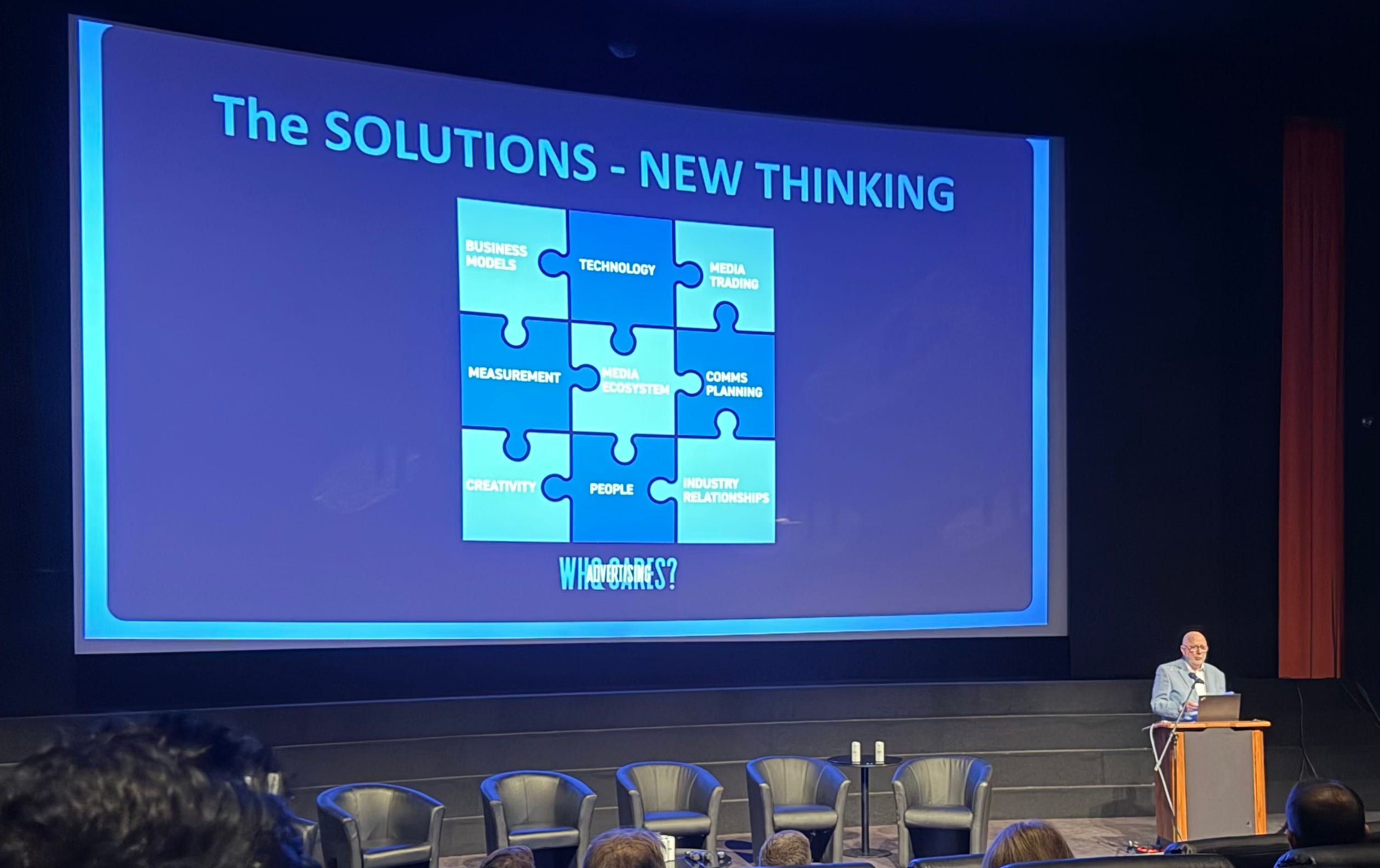
Well, let me, let me tackle that in parts, it’s mostly structural. The way that advertisers operate, in terms of their structures, their organisation, their operations, is not conducive to good advertising, largely because marketing these days covers so many bases. It isn’t just advertising plus other below the line or whatever. There are many, many more factors that play a part in how marketing advertising works, including what these days is referred to are the 7p of price promotion, place, personal, personnel and so on. It’s the 4p model. Is now a 7p model. We don’t need to go into all the seven. We can if you want to, but we don’t have to. And what happens within most client organisations, and this is, this is what our work stream in business models discussed right at the start is that within advertisers, that all a lot of those disciplines are in silos. They all have their own objectives and KPIs and targets and incentives. They’re very they’re very hard, they’re hardly tied up. And yet we know that advertising is only part of the mix. And even within advertising, you’ve got paid for advertising, you’ve got organic advertising, you’ve got content creation, you’ve got influence. You know that even the advertising world is is is divided into many different slices now. So the problem within advertisers is structurally as much as there is fragment, fragmented organisation and fragmented accountability. So one of our key recommendations is to is advertisers, which is where this all begins and ends, or should begin, and then need to reorganise themselves in such a way where they have the all of the owners of those disciplines sitting around the same table, looking at the same data, incentivized on the same incentives, and see it as a single whole. I call it Whole Body, Whole body marketing. And what I mean by that is the same way that a good general practitioner will, will, you know, look at you in your total terms, mind, body and soul and all the bits of it. Marketing is fragmented and lacks accountability, or lacks unified accountability and unified data frameworks to make that accountability mean something. So the first thing that that should happen to improve advertising is for advertisers to want to get more out of it and we firmly believe at the moment that advertisers are leaving too much money on the table, and the other way that they’re doing that is by excessively advertising to individuals, one at a time, on their personal devices, supposedly in a personalised way. But that’s never really happened. It’s been a bit of a myth. So if you take all of those things together, plus some other factors, like creativity and so on, then advertising is underperforming against its full potential.
Omar Oakes 19:51
If we just focus on the largest advertisers, maybe you know the biggest international advertisers Is there a sense that you. Cmo, or the team of top marketers within this organisation, even though there is clearly an industry that very much cares about the prosperity and effectiveness of advertising going forward, that these marketers in these big organisations actually care less and less that even though the ad spend might be growing, you mentioned the seven PS before. Advertising within the whole realm of everything a market is supposed to do nowadays, it’s just becoming less and less important. And therefore they do care less, and therefore they are kind of inclined to do short term tactics which aren’t necessarily effective in the long run, through your work and just, you know, your vast experience in the industry, do you get a sense that that’s happening?
Nick Manning 20:45
Well, I do, but I think it’s important to say that advertisers don’t care about advertising. They only care about their advertising. So they don’t care about advertising in a generic sense or the or the industry. What they do care about is what their advertising is doing for them, and they could be getting more from it if they were doing it the way that we are prescribing. That sounds a bit arrogant, but we’re here for solutions and ideas. We’re not here to just moan about about the problems. And part of the problem is that CMOS have become somewhat disenfranchised within their client or within the client organisations, because they tend to be seen as being only in charge of a part of the farm, as it were. And you’ve got people in charge of all of the other activities of seven P’s, who can be even more influential. And it’s a bit like one of that. One useful analogy for this is a bit like the automotive industry. Historically, the marketing plays a key role, but what really matters is the sales people. You know, how can we get people onto our fore courts and do test drives on a Saturday morning? So the whole industry has become geared towards immediate, immediate results. We need to get more people into the forecourt on a Saturday morning to do the test drives, as the analogy goes. And if you don’t get them, you blame the advertising. And that is kind of that’s what’s happening now, but on a kind of global, massive, trillion dollar scale. So it’s all become about today’s results, today’s clicks, today’s conversions and so on. Whereas, of course, advertising can play a much bigger role in that, and can be very influential in other aspects of a of business building and what’s become, what has happened, and I think you know, you’ve been talking about this as well, Omar is that there is a disconnect between what the CMO is doing and what the CEO and CFO want and need, which is an increase in the value of the corporation and the business. And so what needs to happen is that the marketing function needs to demonstrate that it can actually grow the value of the business in totality. And that’s not happening at the moment, because it’s tends to be bracketed as just another channel, or it doesn’t have the right framework of measurement, or people aren’t understanding how it works. So that frag, that fragmentation of fracturing, is at the heart of this problem.
Omar Oakes 23:18
Which I think is absolutely nuts. I mean, you, you know, you run a consultancy, you started an agency, very successful agency… I’m, in my small way, I’m building a business for myself this year. You’re always, the advice always is that you want your operations to be as consistent as possible, that you know you have, you have a core set of values. This is what I want to do as a business person, as a business and that no matter how big or small you are, everything ideally should be running from that same playbook. And it seems that these large organisations just seem to have wildly different agendas and fiefdoms and capabilities. And it seems like a colossal failure of leadership, actually, when you have perhaps a well intentioned marketer who wants to do good, effective, sustainable, ethical advertising, versus a set of other individuals in the C suite who maybe have a different view. So against all that, assuming that we are kind of talking to these well intentioned marketers who wouldn’t be interested in advertising, who cares that they weren’t. But let’s talk about the agencies. Caroline talks about this triangle of create, deliver, capture value, suggesting most agencies are running on a misaligned operating system. She said they’re built for more. Is more when the future demands less, is more. Explain what she means by that and how we ended up here.
Nick Manning 24:48
Well, it’s part. It is about the business model of the agency world, which, in itself, is also quite a complex thing, but it’s most of it in the past has been about youth. Realisation of people and basically built around man hours and a margin, and that model is crumbling apart as AI in particular, plays a role in making everything faster, better, cheaper, well in inverted commas, faster, better, cheaper. So in order to to help advertisers change, agencies also need to change. They need to go. They need to help advertisers manage their way through this crisis. And it is a crisis, so don’t it’s not too early to start using that the C word. It basically advertisers have got their own crisis, and so have agencies, and they’re interlinked. So what advertisers need to do is to reorganise and agencies need to help them do that. They need to be more strategically able in terms of how they guide advertisers through this process. They need to be experts in communication in the AI world. And they need to change their own business models so that they are less reliant upon the generation of man hours and a margin on top of the man hours, what Caroline calls opening new doors with new products, new services, new IP. But they also need to move upstream. They need to be advising clients on what does good communication in your sector look like, what works, what doesn’t work? What balance should you have between collective targeting of audiences versus one to one targeting of audiences? What does that look like in the real world, and addressing the Miss balance, the lack of balance, if you like, between collective targeting and individual targeting, because everybody’s kind of bit like, you know, school school boy or school girl rugby players swarming all over the pitch towards where the ball is, rather than keeping a structure in place that actually it makes them a better team. Too many analogies, but, but so, you know, the whole industry has gone towards this kind of one to one model, because that’s where they perceive the audiences to be. But the audiences are not interested. They’re skipping and surfing and switching and shopping and they’re scrolling that so they trying to get the attention of the of the public. Now in that environment is very hard. So advertisers, Avatar agencies of various kinds, have to tell clients how to how to reach those people in effective ways in that environment, in that environment where there are multiple channels that are being used by people in the way that they are, rather than just saying, Well, Facebook is where everybody is these days, or Instagram or Tiktok or Amazon, let’s go there, because that’s where they are. They’re not only there, they’re in all sorts of places. So good communications advice, what messaging works, which channels work? Is a core function of good agencies, and I think we’ve lost sight of some of that, but it’s what advertisers need.
Omar Oakes 27:59
So people listening to this the the big agency brands that they’ll know full well, in general, what’s, what’s the problem here? What’s the single biggest barrier that’s preventing agencies from escaping this service model trap that Caroline described?
Nick Manning 28:18
Well, it’s, it is the economic model that they’ve got, which is partly predicated on man hours plus a margin, which is obviously the traditional model and when, and makes them very vulnerable, because if a client comes along and says, Well, you know you can, you can now reduce the number of man hours that you spend on My business, because AI is transforming creative. It’s transforming media, transforming production. Why do I kind of need an agency anymore? And by the way, you know you can halve your fees. We I, I have conversations all the time of people telling me that clients say, now that we’ve got all these new tools, you can, you can reduce your fees. To me, can’t you not always procure? And people, either, they get a bad rap. Sometimes it’s not always procure. Always procuring people. So that model isn’t going to work anymore. What advertisers, what agencies need to do is to do exactly what Caroline prescribed really, which is to create a deliver and capture value in different ways by opening up different streams. Most of it is about providing the kind of expertise that clients simply wouldn’t have or didn’t employ an agency high level strategic advice within their sector, what works and how, and obviously in execution too. So in terms of, you know, making those channels work, the other part of this, and you’ll be amazed to hear me saying this, is that the media agencies have been extracting value from clients for a very long time now in ways that are both overt and covert, and that is another thing that’s going to have to stop, because you can’t be a high level strategic advisor to your clients and then take money below the table. It just doesn’t work. So over time. Agencies are going to have to sort of earn a lot more money legitimately by providing value, delivering value, creating value and proving value to their to their clients. It’s harder work, but I don’t see much future unless they start doing that.
Omar Oakes 30:17
I mean, do you think this is a particular problem in advertising media. Would you see this in happening in other professional sectors, which traditionally have had time based charging models as well? I mean, the immediate example that comes to mind is law. That you’re not an expert in the legal industry, but I’ve heard about paralegals jobs, for example, and entry level jobs, you know, AI decimating those roles. Do you think it’s a wider problem in terms of how professional services just charge based on time?
Nick Manning 30:51
Yeah, I probably, I put within my social circle, probably have more lawyers than any other profession. And of course, it is something they talk about all the time. I mean, I’ve got relatives who work in law firms. So, yes, absolutely, but it isn’t, it isn’t only that. It’s every single sector really, AI is, is transforming industry and commerce. And you only have to look at the big what the big platforms are doing that, you know, the perplexities and the anthropics and and others, what they’re doing. And Google, of course, itself, they are having a massive effect on all industry right now at a speed which we’ve never, ever seen before, and it’s going to have a massive effect on all industries, all businesses, much of it positive, if we harness the tools correctly. But of course, it is going to change the economic models of the entire advertising industry, the legal industry, even the construction industry, is going to be changed by it. So it’s, it’s, it’s, it’s a new revolution. It’s like the industrial revolution, but for the middle classes, and it is going to change all of our lives. It’s changing all of our lives, and it’s going to change the economic models and the employment strategies of the entire advertising
Omar Oakes 32:02
industry, an industrial revolution for the middle class. Definitely. One more thing from the work stream was that you talked about agencies needing to shift from self interest to best interest. What does that mean?
Nick Manning 32:20
It’s very simple, really, which is that most agencies, and I especially included some media agencies, in this, are mostly thinking about how much money they can extract from their clients. And you’ve got clients who are thinking, How much money can how much value can I extract from the agencies? One of the phrases that kept being used by the work stream was there are we have extractive relationships between advertisers and their agencies, and we need to reverse that. We need to get back to a situation where they are strategic partners who have a common goal, and that common goal is a net uplift in profit or for a business selling goods and services, or if it’s a cause or a charity, you know that whatever those objectives are, and by the way, I don’t think this is only about product, products and services that people buy or sell. I think there’s a lot to be said about what this means for the for charities and other causes, but let’s just stick with with the branded goods sector and the service sector for now, is that the way that the industry has gone is that the relationships have broken down. They’ve become extractive. They’ve become there’s a lack of trust, as I think everybody knows and has talked about for how you know, many years and we need to get back into a situation where clients and agencies are strategic partners who have the best their best they each have each other’s best interests in mind, rather than their own self interest. Now, you know all of this is easy to say, Omar, and I’ve been saying a lot of this for many years now, and I found it easy to say very, very hard to do, but we’re in a crisis, and I don’t think we should waste that crisis, and if we do, then the advertising world for the public will change dramatically, and the advertising industry will also change dramatically. Both of those two things are separate, but they are obviously connected, and what we want to do within advertising who cares is make advertising better for both parties, for the for the public, for advertisers and but also for the agencies who service them.
Omar Oakes 34:30
Yeah, and within that, moving to what’s in it for me, to what’s in it for the clients. Caroline talked about this line from shifting from quote, unquote, we will do to you will have, yeah. What does that mean specifically for leadership mindsets, for people that are running these businesses?
Nick Manning 34:52
Well, I think it means that you you need to be very clear about the value that you add to your clients business. You need to be able to. To go in there. And by the way, this is, this is sounds so So Janet and John, but it’s something we’ve moved away from be able to go in there and say, we can improve your fortunes. We but through our skill, our people, our technology, our techniques, we can make your life better. We can grow your brand so we can build your business, and we can do that in the following ways, and we will be able to deliver a net uplift in your business fortunes, whether that be profit or whatever the goal is, through our skill, our people and our techniques and our tools. Rather than thinking, I wonder how much money I can make this week out of this client. I’m dimensionalising deliberately, because I know that the vast majority of people don’t think that way, but unfortunately, the people who own the agencies often hidden, rather hidden ways, do think that way. And so we need to get back to a situation which we had, and by the way, we don’t like using the rear view mirror, but sometimes we do, because this is exactly what agencies did in former times. They had their clients best interests at hearts, and by pursuing that, those best interests, they made money as part of the process, rather than starting with the money and then working back.
Omar Oakes 36:19
Let’s talk more about quality media. There was a separate workstream later in the day that talked about the crisis that is particular to how we fund quality media. And you know, I was saying before about this distinction between look at what happens on certain news brand websites and the damage that’s been done to user experience. So we’re going to have lots of caveats to this conversation, I can tell but broadly, Let’s define terms before we start talking about the issues. What do we mean by quality media?
Nick Manning 36:53
Quality media? For me, in many ways, it’s quite simple. It’s that the public is entertained, informed and educated by and is good at communicating the messages it’s trying to communicate. So it doesn’t have to be a television programme, although TV is a big part of that, more of that in a minute, or radio within that. I also include online titles and in fact, any, any, any channel that carries high quality content for the public and and also delivers a conducive avatar advertising environment too. So that’s what I mean by quality media. What we mean by quality media, people tend to sort of think, Oh, you mean, you know, people should take their money out and put into back, out of out of Facebook or Instagram, into television, you kind of go, no. What we’re talking about here is taking a view that the best place to spend advertising money is where you get the best audience engagement and the biggest advertising effect. And at the moment, that is not what people are favouring. They’re trying to interrupt people in little, tiny fractions of their day with an interruptive, irritating, often irrelevant message. So what we mean by this is to sort of say good comms, planning, good creativity, should sit within advertising, within environments, media environments that deliver a an engaged audience of the right shape and scale, but also is effective at delivering an advertising message. Sounds so simple, doesn’t it, and yet we’ve moved so far away from it.
Omar Oakes 38:37
I mean, it would sound at least to the casual observer, is just a massive market failure. Shouldn’t the market sort this out? If the advertising is as annoying and ineffective as you say, then either the price of the advertising should reflect that, or the demand should reflect that.
Nick Manning 38:54
Yeah, but it’s not a balanced market, is it? I mean, the market is dominated by the big platforms who are, obviously, they’re very popular with the public when it comes to the content they carry. There’s nobody saying that isn’t the case. You know, they’ve got, you know, mesh have got 5 billion or four or 5 billion monthly, you know, users on their platforms and so on. So not saying that this is popular, but they are not necessarily good advertising environments to reach people through Of course, you know, people say well, and loads of businesses have done well out of Facebook and Instagram and so on. Of course they have. But it’s not the only place to advertise, and it isn’t necessarily the the ideal advertising environment, but also, advertising to people on a one to one basis takes longer, costs more overall and can be much less effective, which is one reason why overall effectiveness has declined in advertising over the years is because we’ve moved from reaching people at scale through collective media to trying to reach the people at scale through one to one. And the way that people do that is to sort of say, well, like. Can’t get the scale, but advertising on a one to one basis, so I’m going to put loads of stuff out there so I can reach a lot of people on a one to one basis to try and replicate the scale that I used to have in mass media. And you end up with the situation we have now.
Omar Oakes 40:14
Yeah, you described this doom loop of low cost, low worth media inventory. How do we break that loop?
Nick Manning 40:23
Well, it’s that is an extremely good question. And in the end, and this applies to online advertising as much as anything else, and particularly in the in the open web, is it is all about quality media properties well presented and well targeted and well sold. And what’s interesting, I think we talk about crisis quite a lot here, is that there is a crisis in the open webinar whereby if publishers want to survive, they are going to have to move to making money through the quality of the content that they offer to the public at a higher rate, which is a very, very hard thing to do, but an easy thing to say, but as that is the point that we’ve reached now because of the referral traffic that AI is taking away from the publishers. So there is a series of parallel prices crises going on here. But what good agencies should be saying to their clients, and good ones do, is that you should have a balanced diet of collective audience targeting and one to one audience targeting in the right proportions, and we can figure out what those proportions should be for you, Mr. Client, you should do a and that balanced diet will differ from client to client, sector to sector, day to day, objective to objective, and that’s the job of the agencies. And that isn’t just, it’s just not just a media thing, it’s a creative thing. What messaging is going to resonate with our audiences? How do we present that to the audiences across which platforms and properties on a continuous basis, etc, etc. So it’s it’s the job of agencies has never been more crucial in all this, which is to help clients understand what messaging is going to work and how to make it work. It’s nothing more than we’ve been doing for all of our lives, but on a gigantic and far more complex scale. But that’s what good agencies are good at, and there are many good agencies doing that already, but there’s still too much of a move into a bias towards one to one targeting to try and achieve a short term effect of some kind, whether that be a click through or a conversion rate or a CPA or whatever, because The advertising model has gone towards the short term, generation of an immediate effect, and that is not healthy for advertising and not advertise. Healthy for advertisers. Yeah.
Omar Oakes 42:51
I mean, story I featured on my newsletter this week was Wikipedia outlining the scale of human traffic, which is dropped on the Wikipedia website because chat, GBT and all the rest of them have just been scraping all of this knowledge that’s been built over years and years and years in Wikipedia and whenever people are, you know, researching things on on AI, it’s all coming from public sources. We used to call this theft and, well,
Nick Manning 43:22
it is a more I mean that basically the the the LLMs are taking all of that content for free and depriving the content makers of the of any benefit of it. And, you know, this is a model. It’s the free market in in free fall, in some ways, with no regulation, no guard rails, nothing. And it’s being driven by, you know, the big platforms in in the US and China, and it is going to be catastrophic unless advertisers, in particular, helped by their agencies, want to do something about it. And that’s what we’re trying to achieve with this.
Omar Oakes 44:01
It’s, it’s incredible. I mean, think about Magna Carta in the 11th century. Kind of was brought about because we, you know, the a bunch of rich people, relatively rich people, wanted to protect their property from the King. And that’s, that’s why we have democracy because it was actually people wanting to protect their property fundamentally, and they have this ridiculous situation where an entire multi billion industry is being formed just on the basis of, it seems, taking other people’s property. I just think how we’ve got ourselves into this situation is absolutely nuts. It’s such a break from what we’ve been doing in Western society for so many years. But anyway, I don’t want to get sidetracked. I mean, you said the conference, we heard that half of all internet traffic is synthetic. Two thirds of it is malicious. I mean, do you think the industry and maybe even specifically the advertising? Is with the gold that’s paying for all this. Do you think the industry truly understands how much money is being wasted on fake impressions, on invalid traffic? Do you think they have the real idea?
Nick Manning 45:10
No, they don’t, and that’s part of the problem. Or rather, or maybe they turn a blind eye to it, because if all you care about is a low cost per acquisition number or a low CPM, you go, Well, I got my low CPM, or I got my low CPA. There may have been a load of waste, but I don’t want to hear about that. I only want to I only have a target to hit that I’m hitting or not hitting. And it isn’t just the numbers you’ve just quoted. The other number I quoted, which people really don’t think about anywhere near enough, is the amount of money that goes into the ad tech business. So the number seems to be in the order of seven, $750 billion which to my eye, looks very high when you consider that the advertising spend is a trillion but if it’s true that personalization is effectively mostly a myth, although I think within the good platforms, it’s less of a myth, but certainly in the open web and other places CTV even, even more so in some ways, it’s not just the media money that’s being wasted. It’s all of the money going into the ad tech industry, not all of it, but, you know, a lot of it. So think about this. If you if you buy a bunch of invalid impressions, whether they are malicious or not, you’re wasting the media money. You’re wasting the creative money. You’re wasting the effort that went into making those ads to show to nobody. So the actual chain of value that is being wasted is far, far bigger than the numbers that normally get quoted. And you know, so in our data and technology section, Alessandro and Cameron and Josh talked about 44% of the pizza that arrives on your table. The reality is, by the time you factor in all the elements you’ve just talked about, whether it be invalid, traffic, viewability, etc. It might be 15 or 20% of the pizza that actually does a job. 44% is the kind of number that gets to the publisher after that. So I don’t want to extend the restaurant analogy too much, although people should definitely watch the the AI film, but the the people just do not either understand the scale of the wastage or turn a blind eye to it, or both. Now the other the other problem is the advertising. Parts of the advertising industry are paid whether the traffic is valid or not. So the CPM model people being paid on traffic, people being paid on impressions. It is, is a big part of the problem, and that is why the publishing industry is one. Is a key reason why the publishing industry is in the deep doo. Doo, that it is.
Omar Oakes 47:53
And what do you think? I’m not sure this was addressed on the day itself. But what do you think that trade bodies or even regulators need to do more in addressing this. I mean, started talking about this mini segment, talking about how the market isn’t solving this. Obviously advertising, who cares is providing a educational source. But what about actually some regulation or advice from trade bodies.
Nick Manning 48:23
Well, I think the trade bodies do. I mean, remember that trade bodies are, generally speaking, quite small entities with highly engaged and active people in them, but they have, they have a limited amount of hold over their members so they can advise, they can issue white papers. They can do all the things that they do, and they do it very well, but the advertisers are not obliged to take any notice they don’t want to, and certainly the trade bodies are not allowed to in any form, make it look like they’re acting in concert. And we’ve seen with Garm that that’s how they came across to the people who wanted to see them that way. So they have a limited amount of power to be able to influence their members, but they do the best job they possibly can at that. And the advertising association is bar WFA, a n a double a n, a in Australia, etc. They all do a very good job with limited resources. But in the end, it has to be down to individual advertisers. The people who should be helping the advertisers individually are the agencies. They should be advising them the best way to advertise, both from a creative messaging point of view, and how to deliver those messages in which channels, at what cadence, etc. So the agencies have got to be a big part of the solution to this. At the moment, they get paid in many instances whether the advertising is effective or not, and we have to move away from that situation where they have a lot more skin in the game, a lot more at risk revenues, a lot more split risk revenues. And. And all this talk about outcomes is part of that, which is advertisers saying, Why do I pay you if I don’t even know whether my advertising is working or not? And I could talk forever about outcomes as a word, because I think it’s a really dangerous one. I much prefer to talk about net profit uplift and business results, but let’s not go down that route—
Omar Oakes 50:22
—website visits and app downloads.
Nick Manning 50:25
Yeah, exactly. You know, it’s like part of the problem is everyone’s talking about outcomes, as if a, you know, a click, is a good outcome. It’s an outcome, but it’s not necessarily a good outcome. It may not even be real. So let’s talk about the business results that we’re trying to generate, rather than the sort of short term metrics which everybody else is obsessed by at the moment.
Omar Oakes 50:46
Yeah, it’s extraordinary. I’m going to forget now who said it during the conference, but somebody was referencing three major advertisers and how they effectively either turned off or massively down scaled their programmatic activity, and it had very little negative impact at all. Might have been Billy Ryan from the seven
Nick Manning 51:09
stars. No, it might have been Billy, but James fleet talked about this. And he talked about turn down, turn down social and see what happens. Turn down, you know, and people do this. I mean, you know, test and learn programmes are nothing new. But you know, at some point, you know, use holdouts, downgrade things, change things more than the trouble is, everyone goes, yeah, yeah. But if I, if I stop my search activity or my social activity, or whatever, tomorrow, what happens? If suddenly my traffic collapses, or my clicks go down, or whatever? There’s this kind of short term fear of the unknown, so everybody just carries on doing the same damn thing over and over again, expecting a different result. You know, the classic Einstein thing, and that’s the situation we’re in, because everybody’s obsessed by short term metrics and and fear. You know, people don’t want to stop doing things which they believe may get, you know, may go against them and could potentially jeopardise their job.
Omar Oakes 52:09
Yeah, it’s particularly since I’m leaving full time employment at the end of last year and this year, kind of being on my own, you kind of, you start worrying that the whole world is moving on without you, and that you feel the need to kind of present yourself on social media all the time. And so I’m constantly worried that, oh, I’m not, I’m not active enough on social I’m not kind of contacting people, enough people are going to forget who I am and what I do, etc. But you know what? Every time I go to your conference, other conferences, or just meet up with people in the industry, they always say to me, they always say, Wow, you’re so active, you’re just everywhere, aren’t you? And I think there’s important role for marketing. I’ve heard over a number of years that the people who get bored the most with a brand’s marketing are the marketers themselves, because they see this stuff all the time. The average consumer just isn’t seeing your product. But the key is, and come back to the effectiveness. Thing you want those few times that they are engaging with your products through media, with your brand through media, is that it needs to be memorable and they need to have a good experience while they’re consuming that advertising message and just being bombarded all the time through this fear that, because there is so much online activity that you’ve just got to be a part of this high velocity of information be pumped out every day, that actually it just, number one, is boring. But even worse, it’s it’s just damaging because of the poor user experience against degraded media, poor advertising experience. And somehow, to your point about short term metrics, I really do think it’s that, it’s the psychological thing that is the heart of this, that no matter all the effectiveness data, you know, you quoted Andrew tyndall’s recent drum column in your presentation, we’ve never spent more on advertising, and it’s never done less for us. We, I’m getting a bit sick and tired of kind of going to all these effectiveness conferences. We had the IPA one, two or three weeks ago, where we’re constantly being told that effectiveness is going down because the way in which advertisers are spending money and the message isn’t getting through. I mean, do you think I’m wrong? Is it more than a psychological issue?
Nick Manning 54:16
It’s much more than it’s a practical, day to day business issue. It’s not psychological at all. I mean, the reality is that advertising effectiveness is in decline. You know, it’s not catastrophically in decline, but it is gradually in decline because of the way that people are advertising to the public, whether that be the messaging, but but the thing that Andrew doesn’t talk about, because that’s not what he does, is what’s happened to the money, the advertising money, the amount of money that is being wasted, the amount of money that’s going into one to one media that doesn’t deliver the emotional connections that he talks about a lot, and you just mentioned as well. You know advertising, when it works well, does create a mental connection with the consumer. In. It can at best, get into the memory of people and be lodged there, or it triggers existing memories. All the things that we know about that Karen Nelson field will talk about very convincingly, all of that is still true, because humans haven’t changed that much, but I do overdo the analogies. But what’s happening now is this. The idea was that we would be in an era where we would be using precision to reach people, and we’re going to be using precision tools to do that. So you make one to one marketing work with the precision with which you target people. Well, what’s happened is that they tried that and it didn’t work. So instead of doing that, they kind of use, instead of using a laser driven laser rifle, they’re using a blunderbuss to try and kill birds in a different way, and they’re spraying it out. So you kind of go, why? Why are they spending all that money on personalization through the ad tech industry, and all they’re really doing is just throwing throwing it out. It’s I know you told me off for using over using the fishing analogy before, but they’re using rods and not nets or and they’re not using a combination of rods and nets. They’re using mostly rods, and when those rods don’t work, they put more rods in the water, etc, etc. All of these analogies are kind of right and wrong at the same time, but it’s what people are doing, and good advertisers don’t do that. They sit back and go, what’s the best combination of messaging and media channels to deliver my objective, and they get brilliant advice from brilliant agencies to do that. Now that’s still going on, but it’s not going on as much as it used to, and the results are the advertising effectiveness, engagement with the public, and all those scores are in decline, and it’s hardly surprising when we are running things the way that we are. The other thing before we finish on this is that remember that 50% of advertising these days is not being done through agencies. It’s being done through automated platforms. It’s been done by advertisers themselves, sometimes including your beloved middle market advertisers and the SMEs and so on and so forth. So you know, that’s part of the issue as well, and that’s not going away, but bigger advertisers have to recognise that the public doesn’t distinguish between their ads and the industrial machinery ads that I seek being targeted at me on a day to day basis. So all of these things are issues. You know, advertising who cares is trying to bite the whole elephant one chunk at a time, which we get criticised for, which is fine, but they’re all connected, and that’s why we talk about them as being connected. And we’re trying to provide solutions across the collected pieces of that jigsaw, so that we have a whole body solution, mixing my metaphors and my analogies at the same time,
Omar Oakes 57:52
lot of discussion at advertising. Who cares? I’ve already written a column about it. I see that my old colleague, Jack Benjamin, the media leaders written very strong. Write up about it. Lots of others will too. What’s what’s next? What content is going to come out for people that haven’t seen it? And what is on the agenda for what you do with all this information?
Nick Manning 58:16
Well, that’s that is, of course, the crucial question. Well, the first thing to say is that all of the content that was presented is going to be hosted on our website. On the day we presented it to an audience of well, it maxed out about 200 but obviously during the course of day we had some people coming and going. So 200 people, roughly, have seen our content so far. We want 1000s of people to see our content, and so we’re going to put it on our website, and then we’re going to sort of make, make sure people start to go to that in ways that we can so obviously, LinkedIn plays a crucial role. We need to work out a programme of comms in terms of driving people to that content. We might end up, for example, doing a series of podcasts about each of the work streams individually, which we would then host on the usual platforms, et cetera, et cetera. All of that needs to be worked through. Up until last week, the most important focus was, what are the work streams going what have they decided to say? How they’re saying it, what does the content look like? And now we sit back and go right. We’ve now got an enormous amount of content. So the big difference between our conference and other conferences is that it lives on. The content will not go away. It will be disseminated and used and propagated from here on in and it’s not a conference where the doors close, people go home and everyone goes back to square one. This is a permanent job, not A, not A, you know, a finite thing. So our content is very good. We want more people to see it. And most of our work stream this sort of said, Can we keep going? Please? They like it. They enjoy it. They find it useful and interesting, and they want to do more. Even though they’re all, you know, volunteers. So that’s gratifying, too. So I think people care a lot, and they want to do more of this kind of stuff, and we have to figure out how we get the maximum benefit benefit from that for advertisers number one and agencies number two, and then media owners and others, certainly, as part of that mix.
Omar Oakes 1:00:21
And for people listening to this who like the sound of all that, how can they find out more? How can they get in touch and potentially help you?
Nick Manning 1:00:30
They can go to our website. And I realise that having a website these days is somewhat recherche because of what’s happening in the in the market, but the website is the place to go there is all the detail. Is there? No doubt we’ll be rewriting it in the near future based on around the content that we’ve we’ve produced. But yeah, that’s advertising. Who cares is, is, is the place to go? And the the web address is very simple to find. You can use Google or chat GPT, or anybody else for that matter. And yeah, it’s we want more people to come on board. The people have started to say to us, how can I find out? More people have started to say things like, oh Sally weavers and Pippa glucklich said, Let’s form a media comms, media planning group like the APG. People have sort of said, how can we join that? So, you know, there’s some good early signs of progress.
Omar Oakes 1:01:22
Okay, fascinating, and the time has flown by. There’s so much to talk about, but we do have to draw a line and get on with our day jobs, I suppose. Nick, thank you so much for coming on. Of course. Anyone listening out there, you can email me if you have thoughts at omar@oomphoomph.com (that’s the name of my consultancy; oomph.com, was taken!) and of course you can reach both of us on LinkedIn. Just search for Nick Manning or Omar Oakes and let us know what you think. Nick Manning, thank you very much.
Nick Manning 1:01:56
Enormous pleasure. Thank you. You you.
All content produced, edited and hosted by Omar Oakes (Copyright: Oomph, a registered UK company)

